



The sea moss supplement market has grown rapidly, and the quality range is enormous. At one end: carefully sourced, third-party tested gummies with fully disclosed ingredient amounts and clean formulations. At the other end: products that put "sea moss" on the label, include trace amounts of unverified extract, and rely on marketing imagery to sell products that produce no measurable results. Knowing how to evaluate sea moss gummies requires cutting through the noise with specific, verifiable product attributes.
What Separates a Good Sea Moss Gummy From a Low-Quality One
The evaluation framework applies to any sea moss gummy product, regardless of what brand is promoting it. The key distinguishing factors are: milligram disclosure for all active ingredients on the Supplement Facts panel (not "sea moss complex" or "proprietary blend" without amounts), iodine content disclosed in micrograms per serving, a certificate of analysis from an accredited third-party laboratory, species-specific sea moss identification (Chondrus crispus or Gracilaria rather than generic "seaweed extract"), and a clean sweetener profile without artificial dyes. Products meeting all five of these criteria represent the top tier of the market.
Key Ingredients to Look for in Sea Moss Gummies
The foundation of any quality sea moss gummy is sea moss extract standardized to a disclosed milligram amount per serving. Beyond the sea moss base, top-tier formulations include complementary ingredients with synergistic evidence: burdock root for liver and lymphatic support, dandelion root or leaf for kidney function and bile stimulation, and magnesium citrate for bowel regularity and mineral support. Each of these should also have its own milligram disclosure on the label. What to avoid: artificial dyes (FD&C Red No. 40, Yellow No. 5), high-fructose corn syrup, excessive sugar (more than 3g per serving), and the use of generic "seaweed extract" rather than species-specific sea moss. Species matter because different sea algae have different mineral and polysaccharide profiles.
Third-Party Testing and Why It Should Be Non-Negotiable
Third-party testing in sea moss gummies is not optional — it's the minimum standard for a product you plan to consume daily. Sea moss bioaccumulates minerals from its growing environment. In clean water, that means rich mineral density. In contaminated water, that can mean arsenic, lead, cadmium, and mercury at levels that accumulate with daily use. A certificate of analysis from an accredited third-party laboratory — not the manufacturer's own lab — confirms that heavy metals tested below safe thresholds and that microbial contamination is absent. Brands that publish their COAs publicly, or provide them upon consumer request, are demonstrating a level of transparency that is directly correlated with product quality. If a brand can't or won't provide a COA, that tells you everything you need to know.
Don't Settle for a Label — Evaluate the Standard
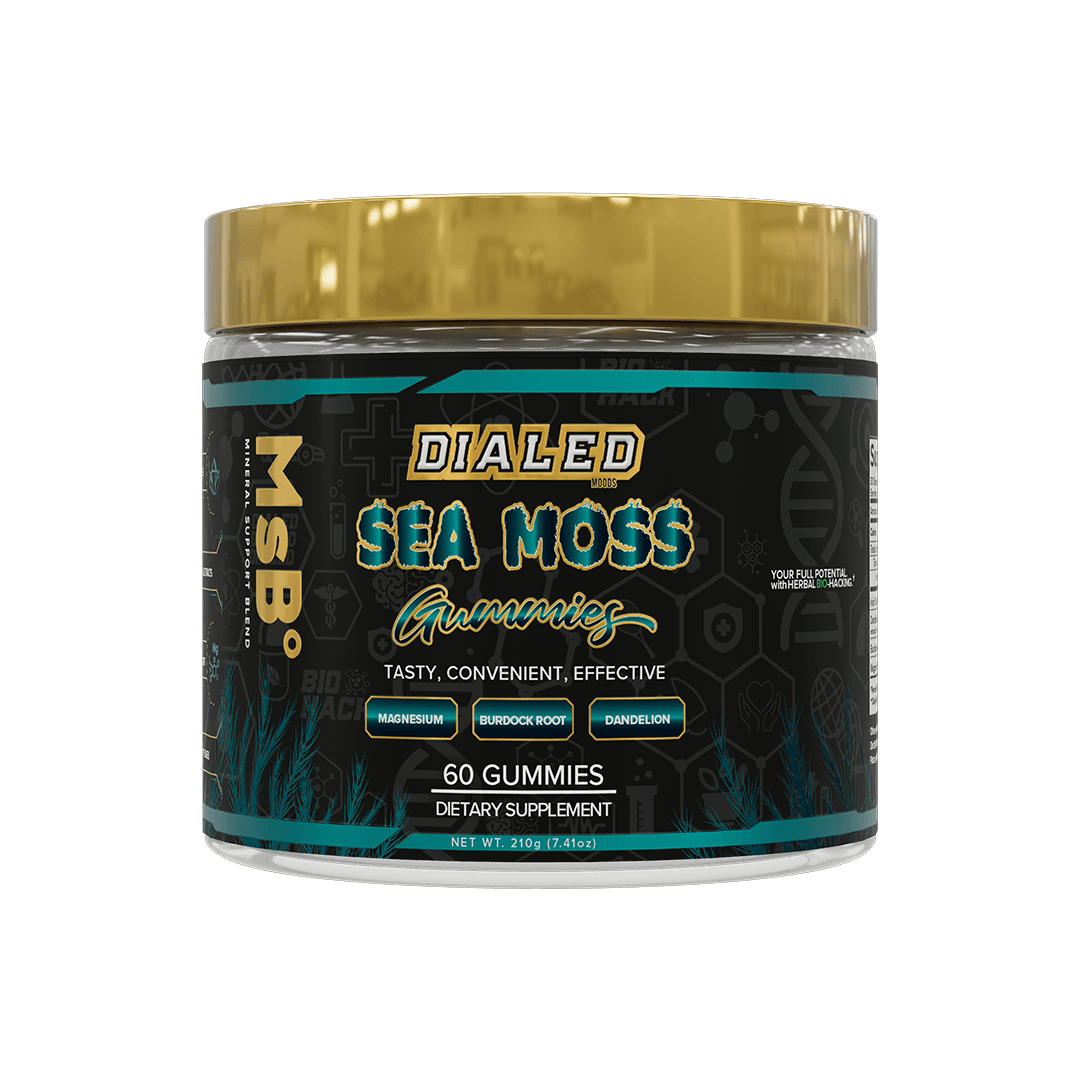
Dialed Moods sea moss gummies meet every quality marker that separates effective supplements from expensive placebos — disclosed milligrams, iodine content, third-party COA, Chondrus crispus sea moss, and burdock root and dandelion in a fully transparent formula.
Sea Moss Gummy Dosage and Serving Size Comparison
Effective sea moss gummies deliver between 500mg and 2,000mg of sea moss per serving. Below 500mg, the dose is unlikely to be sufficient to produce meaningful mineral or prebiotic effects. Above 2,000mg, iodine accumulation becomes a concern depending on the product's iodine content. Look specifically for iodine content disclosed in micrograms on the label. A serving delivering 100 mcg to 400 mcg of iodine falls within the safe and supportive range for healthy adults. Products that disclose only total sea moss milligrams without iodine content make it impossible to assess safety or efficacy for thyroid support. The sugar content per gummy also deserves evaluation: two gummies with more than 5 grams of sugar total undermine the health positioning of the supplement.
Subscription vs One-Time Purchase: Which Makes More Sense
Sea moss results require consistent daily supplementation for 60 to 90 days minimum. This makes subscription purchasing the economically and practically superior choice for anyone committed to evaluating the supplement properly. Quality sea moss gummy brands typically offer 15% to 25% subscription discounts compared to one-time purchase pricing. For a supplement you'll be taking daily for months, the savings are substantial. More importantly, subscription eliminates the risk of running out and breaking your supplementation streak — which is the single most common reason people fail to see results and incorrectly conclude the product doesn't work. Check subscription terms before committing: easy cancellation policies, flexibility to pause, and transparent billing practices are all markers of a brand confident enough in its product to make the process frictionless.
The Best Sea Moss Gummies Worth Considering in 2025
The sea moss gummies ranking in 2025 consistently elevates products that share the same characteristics: fully disclosed ingredient milligrams, iodine content disclosure, accessible third-party COA, multi-ingredient formulations including burdock root and complementary herbs, clean sweetener profiles, and subscription options with clear cancellation terms. Dialed Moods sea moss gummies check every box on this evaluation framework: Chondrus crispus sea moss combined with burdock root, dandelion, and magnesium citrate in a fully disclosed serving, with third-party testing documentation, disclosed iodine content, and clean sweetener profile. For anyone who has wasted money on low-quality sea moss products that produced no results, the path forward is not giving up on sea moss — it's switching to a product that meets the standards that actually drive outcomes.
The Sea Moss Gummy Evaluation That Protects Your Investment
Most disappointing experiences with sea moss gummies trace back to choosing products based on price or marketing rather than the five verifiable criteria that determine quality: milligram disclosure, iodine content, third-party COA, species specificity, and clean sweetener profile. The standards that differentiate high-quality products from low-quality ones are not proprietary secrets — they're label-readable facts that any consumer can verify before purchasing. Use the evaluation framework. Choose accordingly.
Related reading: