



The majority of people who take sea moss gummies at the recommended serving — typically two gummies per day — do not experience significant side effects. The most commonly reported early experiences are digestive: mild bloating, increased bowel frequency, or gas during the first one to two weeks of use. True adverse effects from sea moss — the kind worth concerning yourself with — are primarily related to iodine content, potential heavy metal contamination in poorly sourced products, and specific medical contraindications. Here is the complete, accurate picture.
How Common Are Sea Moss Side Effects
The majority of people who take sea moss gummies at the recommended serving size do not experience significant side effects. The most commonly reported early experiences are digestive in nature: mild bloating, increased bowel frequency, or gas during the first one to two weeks of use. These are not warning signs — they're the predictable result of adding a significant prebiotic fiber source to a gut that wasn't receiving it before. They typically resolve by week two as the microbiome adjusts. For the vast majority of healthy adults taking a quality, third-party tested product at recommended doses, sea moss gummies are well-tolerated and safe for daily ongoing use. The goal of a complete side effects overview is not to create alarm but to flag the specific situations — involving iodine, heavy metals, and drug interactions — where meaningful caution is warranted.
Iodine Overload and Thyroid Risk From Sea Moss
Sea moss iodine side effects represent the most clinically significant concern — particularly for users who go beyond the recommended serving or stack multiple sea moss products simultaneously. Iodine is essential for thyroid function, but excessive iodine can trigger thyroid dysfunction in both directions. High iodine intake can cause iodine-induced hyperthyroidism (the Jod-Basedow phenomenon) in people with pre-existing thyroid nodules or latent thyroid disease. It can also cause iodine-induced hypothyroidism through the Wolff-Chaikoff effect, in which high iodine suppresses thyroid hormone synthesis. Sea moss thyroid side effects are most likely in people with a diagnosed thyroid condition, those on thyroid medication, or those simultaneously consuming other high-iodine foods in large amounts. For healthy adults with normal thyroid function consuming sea moss at the standard two-gummy serving from a product with disclosed iodine content, the risk is low.
Heavy Metal Concerns in Sea Moss Supplements
Algae are bioaccumulators — they absorb minerals from their environment, including potentially harmful heavy metals like arsenic, lead, cadmium, and mercury if grown in contaminated waters. Sea moss heavy metals risk is not theoretical: independent testing of sea moss products has found variable but sometimes significant heavy metal contamination in products that were not independently tested before sale. The risk is not from sea moss itself but from where the sea moss was harvested. Sea moss farmed in controlled, clean Atlantic Ocean waters has a dramatically different contamination profile than sea moss harvested from polluted coastal areas without testing. Third-party heavy metal testing by an accredited laboratory — with a certificate of analysis covering arsenic, lead, cadmium, and mercury — is non-negotiable when choosing a sea moss supplement.
Clean Sourcing. Third-Party Tested. Full Iodine Disclosure.
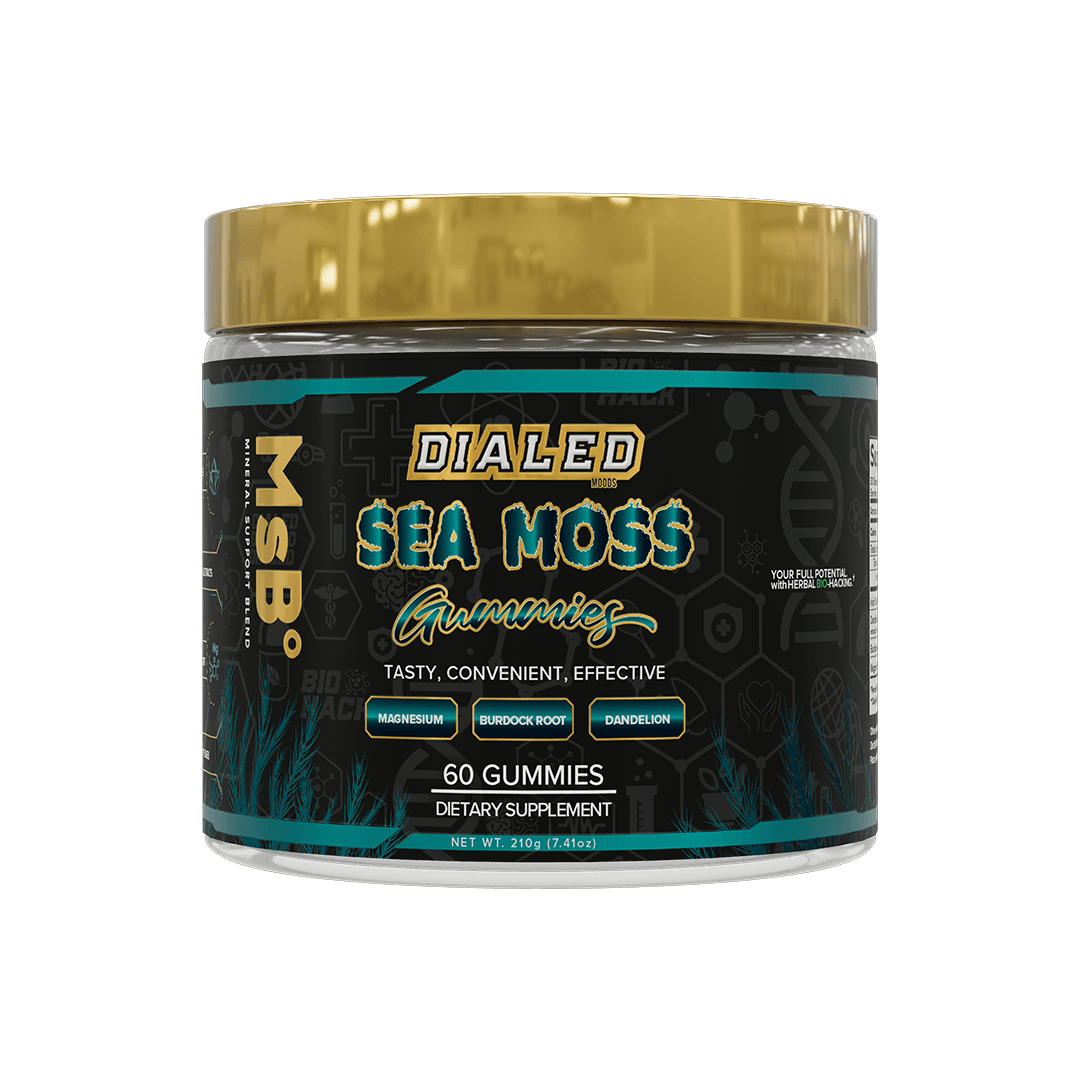
Dialed Moods sea moss gummies are built for daily use with the safety standards that matter — published COA for heavy metals, disclosed iodine content per serving, and quality sourcing you can verify.
Who Should Avoid Sea Moss Gummies
Sea moss warnings apply most directly to: people with diagnosed hyperthyroidism or hypothyroidism not being monitored by a physician; people on thyroid hormone replacement therapy (levothyroxine) or anti-thyroid medications; people with known iodine sensitivity; and people with autoimmune thyroid conditions including Hashimoto's thyroiditis and Graves' disease. Sea moss is also not recommended without physician approval for pregnant or breastfeeding women — iodine needs are elevated during pregnancy but excess iodine can affect fetal thyroid development. People with known shellfish or iodine allergies should consult an allergist before starting. Children and adolescents should not use sea moss supplements without pediatric guidance.
Sea Moss and Medication Interactions
Sea moss medication interactions are primarily relevant for three categories: blood thinners, thyroid medications, and immunosuppressants. Sea moss contains vitamin K, which can counteract the effects of warfarin and other anticoagulant medications — anyone on blood thinners should not add sea moss without consulting their prescribing physician. Thyroid medications interact with iodine intake in complex ways — adding a significant new source of iodine through sea moss can shift dose requirements for these medications and make previously stable thyroid levels unpredictable. Some sources suggest sea moss may have mild immune-modulating properties based on its fucoidan content; people on immunosuppressant medications, including those post-organ transplant or managing autoimmune conditions with biologics, should discuss any new supplement with their physician.
How to Choose a Safe Third-Party Tested Sea Moss Gummy
Selecting a safe sea moss supplement comes down to brand transparency. Look for a certificate of analysis from an accredited third-party laboratory covering heavy metals, microbial contamination, and iodine content per serving — not just an in-house test. Look for iodine disclosure on the Supplement Facts panel. Price is a proxy for quality in this space: sea moss gummies sold at very low price points cannot support the harvesting, processing, and third-party testing practices that result in safe, high-quality products. Choose brands that are transparent about their sourcing — where the sea moss is harvested, whether it's wildcrafted or pool-farmed, and whether they publish their COAs on the product page or make them available upon request.
Sea Moss Side Effects Are Manageable — With the Right Product
For the vast majority of healthy adults, sea moss gummies from a third-party tested, transparently labeled brand are safe for daily use. The side effect picture is dominated by digestive adjustment in week one and iodine management for the specific subset of users with thyroid conditions or high existing iodine intake. Choose a brand that discloses iodine content, publishes heavy metal testing results, and sources from clean waters — and the risk profile drops to minimal for most users.
Related reading: