





Low electrolyte levels produce a symptom cluster that is easy to misattribute. Fatigue that doesn't resolve with more sleep. Muscle cramps at night or during workouts. Headaches that are dull, persistent, and only partially responsive to water. Heart palpitations. Constipation. These are all consistent with electrolyte deficiency — particularly magnesium, potassium, and sodium depletion — but rarely identified as such in the first round of symptom analysis. Here is what your body is actually telling you, and how to tell the difference between electrolyte depletion and everything else.
The Most Common Symptoms of Low Electrolytes
Electrolyte imbalance doesn't announce itself dramatically unless it progresses to clinical severity. Subclinical electrolyte deficiency — the range that affects the majority of the population — produces exactly these vague, overlapping symptoms that get attributed to stress, aging, poor sleep, or being generally out of shape. Fatigue that doesn't resolve with more sleep. Muscle cramps at night or during workouts. Dull, persistent headaches only partially responsive to water. Heart palpitations that feel like occasional skipped beats. Constipation from reduced smooth muscle tone in the gut. Irritability and mood instability without identifiable cause. All of these symptoms deserve more attention because they reflect a real and correctable physiological deficit — not aging, not stress, not poor fitness.
Muscle Cramps, Fatigue, and What Your Body Is Telling You
Muscle cramps are the most specific signal of electrolyte imbalance. When magnesium levels drop below the threshold required for calcium antagonism in muscle tissue, muscles contract but cannot fully relax — producing the painful, sustained involuntary contraction known as a cramp. This happens most commonly at night (when cortisol drops and magnesium is at its daily low) and during prolonged exercise (when magnesium is lost through sweat). Fatigue in the context of electrolyte deficiency has a specific character: it's not the sleepy fatigue of sleep deprivation but the flat, heavy fatigue of a body that cannot generate energy efficiently. Magnesium is required for ATP synthase — the enzyme that produces ATP. Without adequate magnesium, even well-fed, well-slept individuals cannot run their energy production systems at full capacity. This is why electrolyte imbalance fatigue often persists despite normal sleep and nutrition and resolves more quickly with mineral replenishment than with additional rest.
Brain Fog and Headaches Linked to Electrolyte Deficiency
Brain fog and electrolytes are more directly connected than most people realize. The brain requires precise extracellular sodium concentrations to maintain the electrical potential of neurons. When sodium drops — from excessive plain water intake, heavy sweating without replacement, or low dietary sodium — neural transmission slows, signal clarity degrades, and the subjective experience is reduced cognitive sharpness: difficulty finding words, slower processing, inability to maintain focused thought. Headaches from low electrolytes typically present as vascular or pressure-based, located at the temples or base of the skull, and respond partially to water but not fully. The remaining intensity after adequate water intake is the sodium or magnesium component — the missing mineral that would have allowed the water to be properly utilized. Magnesium deficiency headaches are well-documented; supplemental magnesium is an evidence-backed migraine prophylaxis.
Stop Ignoring the Signals Your Body Is Sending
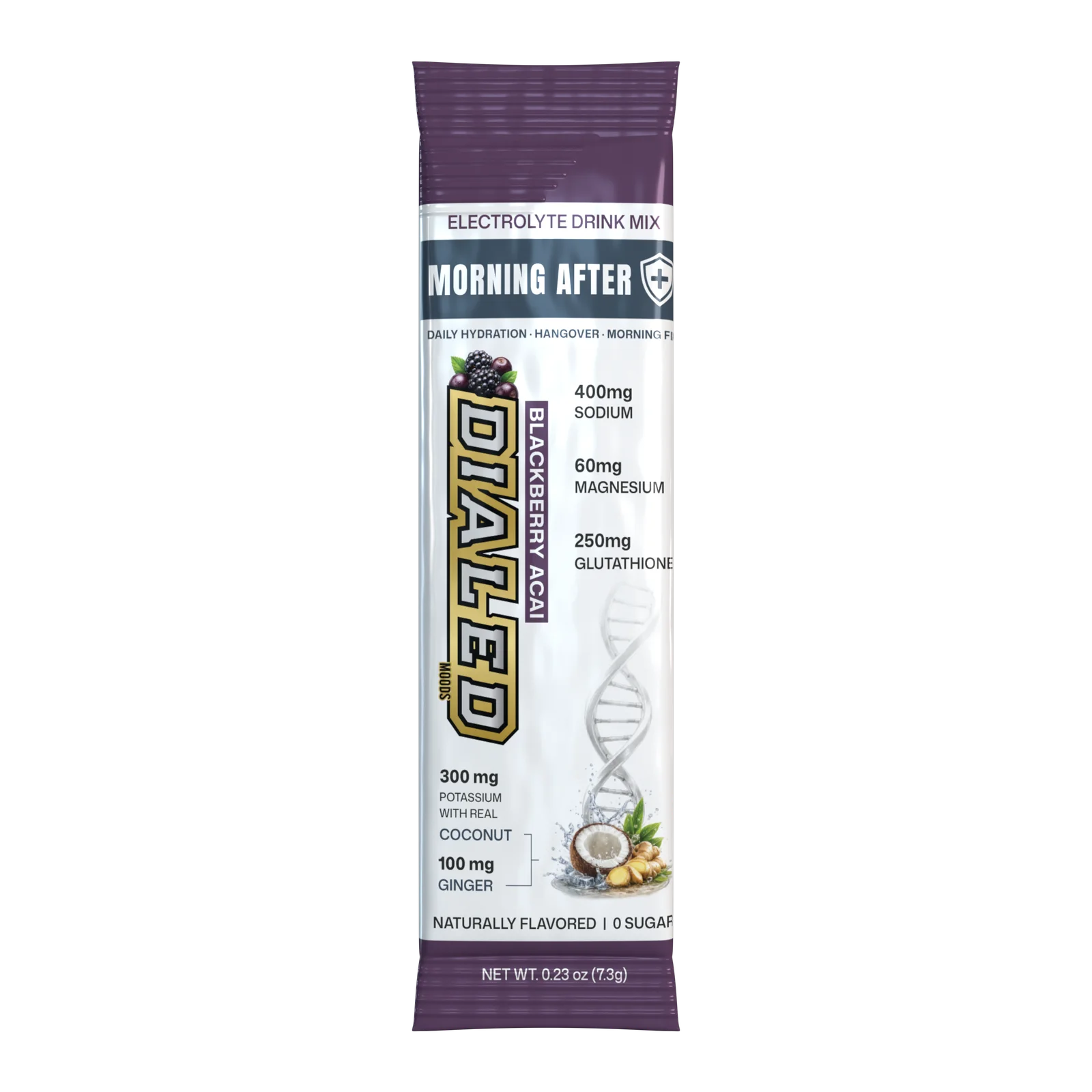
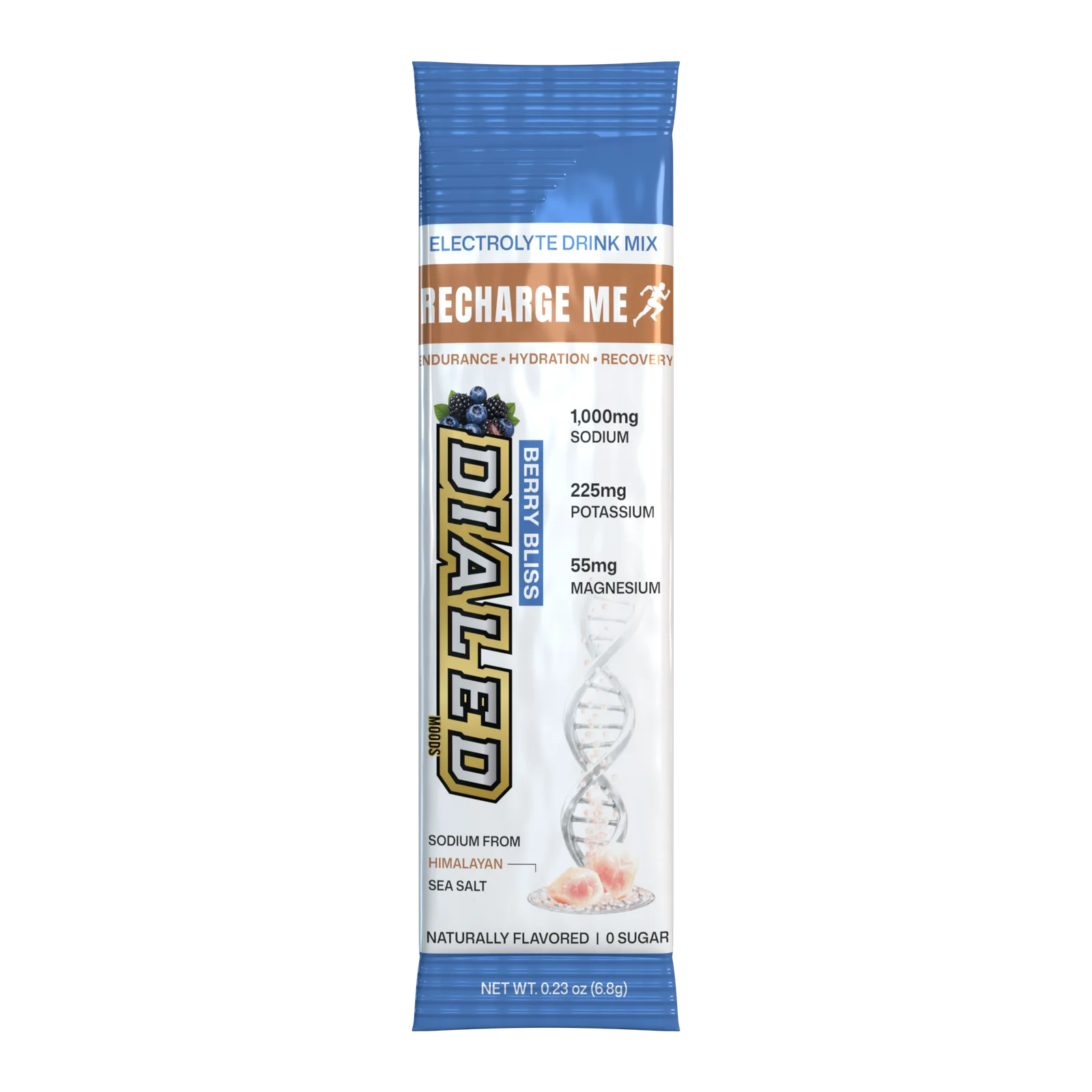
Persistent fatigue, recurring headaches, nighttime cramps, and afternoon brain fog are not just stress — they're your body pointing at a correctable mineral deficit. Dialed Moods electrolyte packets address the deficit your symptoms are pointing to. Results typically within 30 to 60 minutes.
Electrolyte Imbalance in Athletes vs Sedentary Individuals
Athletes experience electrolyte imbalance acutely — the cramps, performance drop, and mental fog that come within a single session of significant sweat loss without replacement. The large fluid volumes lost during intense training create large mineral losses that produce rapid, identifiable symptoms. An athlete who cramps in mile 20 of a marathon or in the third set of a heavy squat workout is experiencing real-time electrolyte depletion. Sedentary individuals experience electrolyte imbalance chronically and subtly. Without the dramatic acute signal of exercise-induced loss, deficiency builds over days and weeks through stress-driven magnesium depletion, caffeine-driven potassium loss, and inadequate dietary mineral intake. The symptoms are slower to appear and easier to normalize as "just how I feel." But the physiological consequences — impaired energy production, disrupted sleep, reduced cognitive performance — are the same in both populations.
How to Tell If Dehydration or Electrolyte Loss Is the Real Issue
The overlap between dehydration and electrolyte deficiency symptoms is significant, but there are distinguishing characteristics. Dehydration typically produces thirst, dark urine, dry mouth, and a general sense of needing water — symptoms that reliably resolve with adequate water intake. If symptoms persist or only partially improve after drinking water — particularly if muscle cramps, headaches, or brain fog continue — the deficit is electrolyte-based rather than purely fluid-based. The simplest home test: if your symptoms improve more from an electrolyte drink than from plain water at the same volume, you had an electrolyte deficit rather than a hydration deficit. If plain water fully resolves the symptoms, dehydration was the primary issue. This distinction matters because treating electrolyte deficiency with more water without electrolytes can worsen the situation by further diluting blood sodium.
When to Address Electrolyte Imbalance With Supplements
For mild to moderate electrolyte depletion in otherwise healthy adults — the most common scenario — electrolyte packets are the most practical and effective first response. They provide immediate, measurable doses of sodium, potassium, and magnesium that address the deficit within 30 to 60 minutes. The response time is faster than food sources because the minerals are already dissolved and ready for absorption. For severe symptoms — extreme muscle weakness, significant cardiac irregularities, confusion, or seizure — electrolyte imbalance has reached clinical severity and requires medical evaluation rather than over-the-counter supplementation. These severe presentations are rare in healthy people but do occur in endurance athletes, people on certain medications, and individuals recovering from illness with significant fluid loss.
Your Body Gives Signals. The Right Response Matters.
Persistent fatigue, recurring muscle cramps, headaches that won't fully resolve with water, and afternoon brain fog are not inevitable — they're correctable. Electrolyte deficiency is the most common and most overlooked driver of these symptoms in otherwise healthy adults. Identifying it correctly and addressing it with a quality electrolyte supplement is one of the fastest-turnaround wellness interventions available. Most people feel the difference within an hour of their first packet.
Related reading: