



A hangover is the compound result of dehydration, acetaldehyde toxicity, disrupted REM sleep, inflammatory cytokine release, and electrolyte depletion. Electrolyte packets address two of these five mechanisms directly and meaningfully: dehydration and mineral loss. Here is exactly how alcohol depletes electrolytes, which minerals matter most for recovery, and how to use electrolyte supplementation before, during, and after drinking for the best possible morning-after outcome.
Why Alcohol Causes Electrolyte Depletion
Alcohol is a diuretic — it suppresses antidiuretic hormone (ADH), the hormone that signals the kidneys to conserve water. When ADH is suppressed, the kidneys excrete water at an accelerated rate, taking dissolved electrolytes with it. Each trip to the bathroom during alcohol consumption represents a loss of sodium, potassium, and magnesium. Beyond the diuretic effect, alcohol metabolism places a significant burden on the liver, consuming B vitamins and reducing the availability of cofactors needed for normal metabolic function. Acetaldehyde, the toxic byproduct of alcohol metabolism, triggers inflammatory cytokine release contributing to morning headache, nausea, and fatigue. Alcohol also disrupts sleep architecture — suppressing REM sleep and triggering early awakening — leaving the body without the restorative processing that would normally occur.
Which Electrolytes Are Most Depleted After Drinking
Sodium is lost through ADH-suppressed kidney excretion during drinking — the magnitude depends on total alcohol volume, duration, and fluid replacement. Significant sodium depletion contributes directly to hangover headache through vascular instability and plasma volume reduction. Potassium is lost through both urine and, in cases of vomiting, gastric excretion. Potassium depletion produces muscle weakness, fatigue, and the body heaviness that makes getting off the couch feel like a significant undertaking. Magnesium depletion — driven by alcohol's inhibition of renal magnesium reabsorption — is linked to the anxiety, light sensitivity, and headache component of hangover that is particularly resistant to plain water. Electrolyte recovery hangover protocols that address all three minerals outperform those focusing on sodium and potassium alone.
How Electrolyte Packets Speed Up Hangover Recovery
Electrolyte packets address two of the three primary hangover mechanisms directly: dehydration and electrolyte depletion. Sodium in the packet drives fluid retention and plasma volume restoration — relieving the vascular headache component. Potassium restoration supports cellular hydration and reduces physical weakness and fatigue. Magnesium addresses the headache, anxiety, and light sensitivity elements that water alone doesn't touch. The practical difference between waking up hungover and drinking a glass of water versus an electrolyte packet is consistent and measurable: the electrolyte packet produces faster relief of headache and fatigue in the one-to-two-hour window because it addresses the full spectrum of deficits rather than just the fluid component. It doesn't cure a hangover — acetaldehyde toxicity and inflammation have to run their course — but it removes the electrolyte-depletion layer that significantly amplifies severity.
Recovery Shouldn't Take All Day
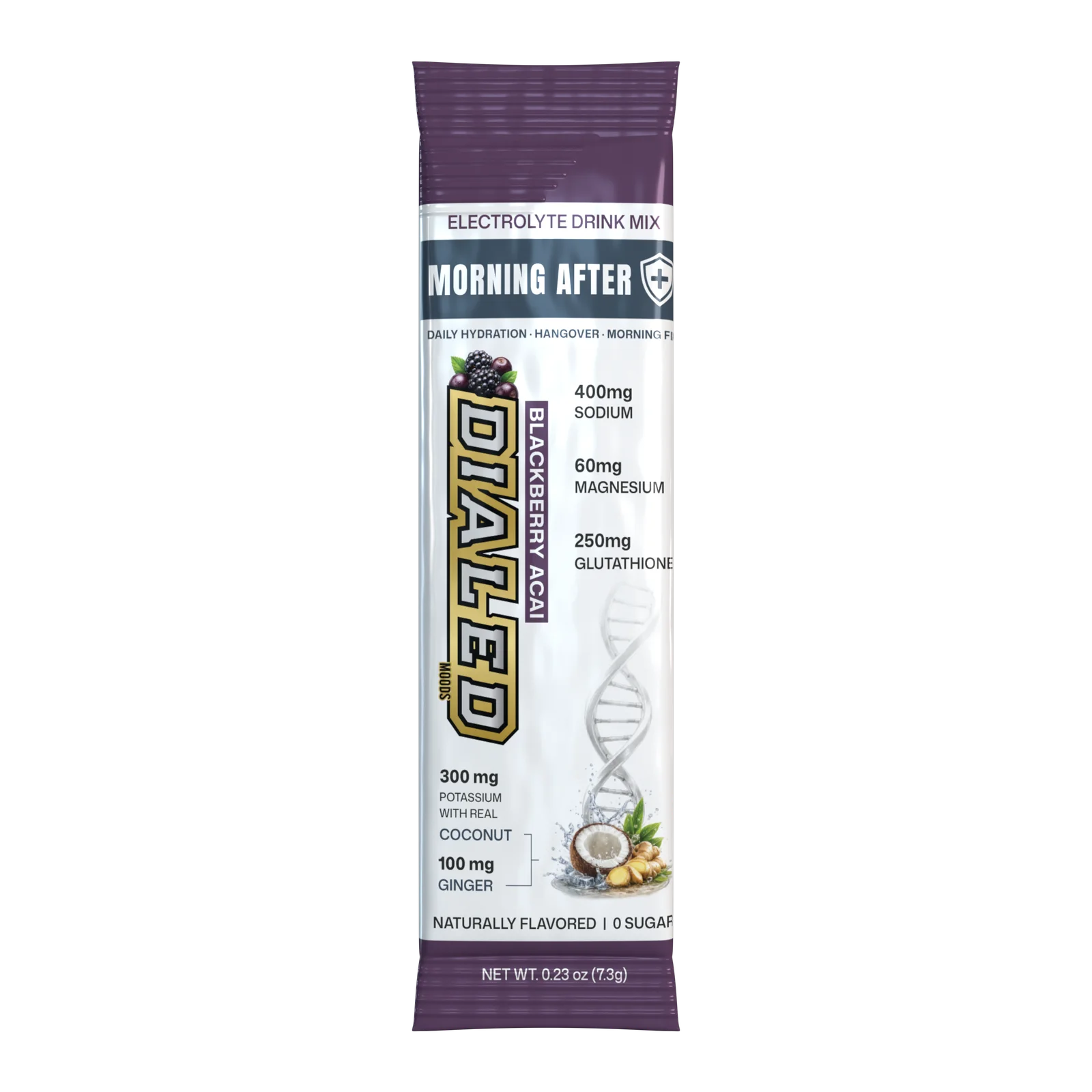
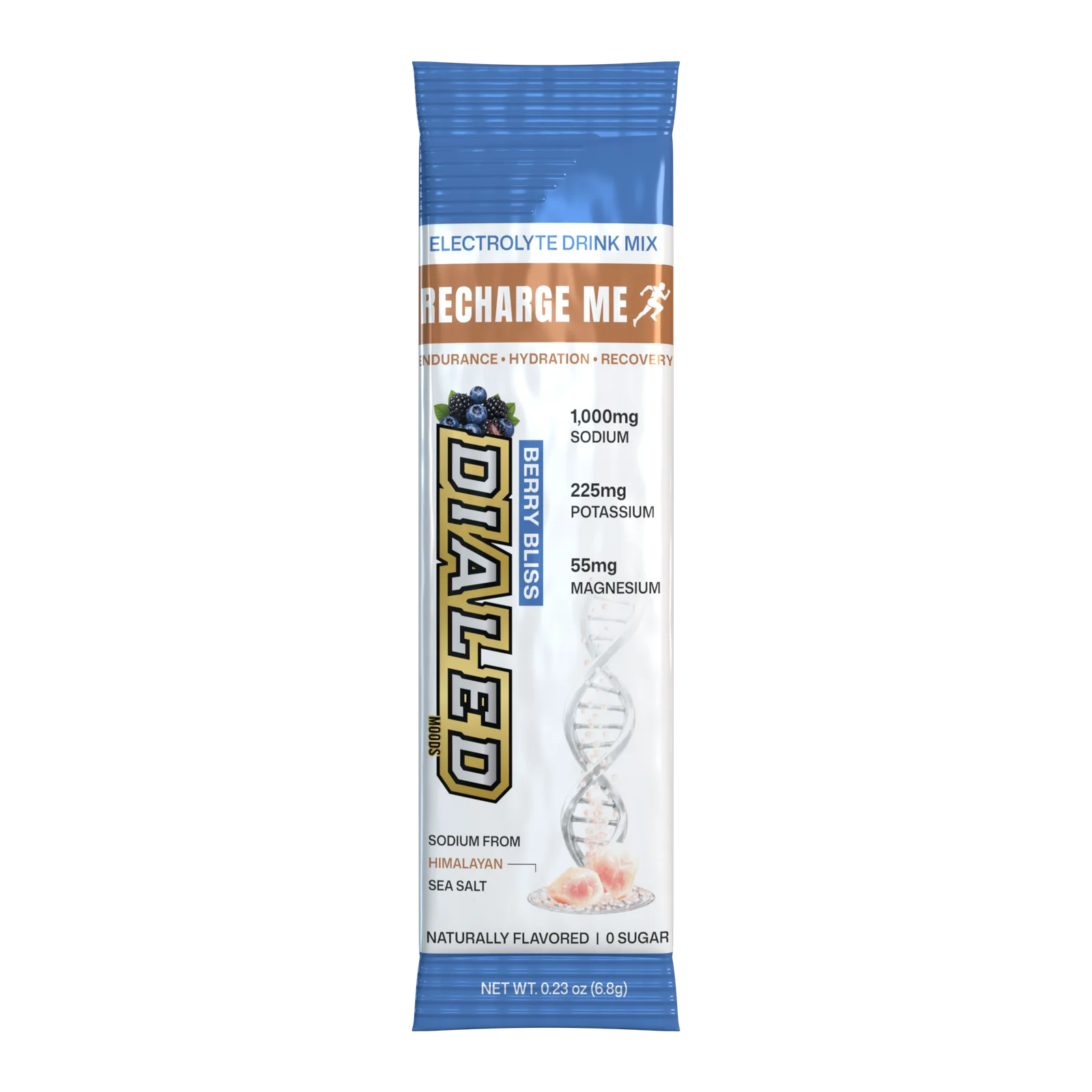
Dialed Moods electrolyte packets deliver the minerals your body lost — sodium for plasma volume, potassium for cellular recovery, magnesium for the headache and anxiety components — fast. Available in flavors that work on a sensitive morning stomach.
When and How to Use Electrolytes After a Night Out
Timing matters for hangover electrolyte use. The optimal window is immediately before bed after drinking — depletion is highest at this moment and replenishment can prevent the worst symptoms from developing during sleep. One packet in 16oz of water before bed, consumed alongside additional plain water, provides sodium for fluid retention and magnesium for sleep architecture support. Morning after is the second most important window, particularly if the before-bed packet wasn't possible. On waking, drinking one electrolyte packet in 20oz of water before coffee addresses overnight depletion that accumulated on top of the drinking-session losses. The sequence — packet on waking, followed by food, followed by coffee — produces significantly better morning recovery than coffee-first, which adds caffeine-driven diuresis on top of already-depleted mineral status.
Electrolyte Packets vs IV Drip Hangover Treatments
IV hangover recovery services offer intravenous saline, vitamins, and electrolytes at prices ranging from $100 to $400 per session. The physiological rationale is sound: intravenous electrolyte delivery bypasses intestinal absorption and achieves faster plasma concentration restoration. For severe hangovers with persistent vomiting preventing oral consumption, IV delivery is the appropriate intervention. For the overwhelming majority of standard hangovers, oral electrolyte packets produce outcomes that approach IV treatment at a fraction of the cost. The intestinal absorption of dissolved electrolytes is already very efficient, and the delay between oral consumption and symptom improvement (30 to 60 minutes for packets vs 20 to 30 minutes for IV) is a minor practical difference. IV treatment is a premium experience for a problem that a $2 electrolyte packet resolves adequately in most cases.
Pre-Drinking Electrolyte Strategies That Actually Help
Loading electrolytes before drinking is a genuinely effective harm reduction strategy. Consuming one packet in water 30 minutes before a drinking session starts the evening with full mineral reserves rather than at baseline — giving the diuretic depletion effect more ground to cover before reaching deficit levels that produce symptoms. Consuming one additional packet between drinks, or once during a longer drinking session, replaces some of the ongoing urinary losses in real time. This strategy doesn't prevent a hangover from excess alcohol, but it reduces the electrolyte-depletion component meaningfully. Pairing this with appropriate food consumption and alternating alcoholic and non-alcoholic drinks creates a comprehensive harm reduction protocol that improves next-morning outcomes without requiring abstinence.
Electrolytes for Hangovers: The Complete Strategy
The electrolyte hangover protocol covers three windows: pre-drinking to build reserves, before bed to prevent overnight depletion from worsening, and on waking to address accumulated losses. Covering any two of these three windows measurably reduces hangover severity. The mechanism is simple — you're replacing what alcohol's diuretic effect stripped out. The more completely you replace it, and the earlier you start, the better the morning-after outcome.
Related reading: